The growth isn't just anecdotal. Disguise, one of the major players in virtual production technology, says it has helped deliver more than 400 virtual-production stages in over 100 countries as of 2025. That's a massive footprint for a technology that barely existed as a mainstream tool six years ago.
Here's the problem: a lot of teams know LED volumes look impressive, but they don't understand the actual pipeline running underneath — tracking, rendering, processing, and sync. That gap leads to bad panel choices and painful on-set surprises. This guide breaks down exactly how an LED volume wall works, stage by stage, not just what it looks like on screen.
Key Takeaways
- LED volumes run on four core systems: camera tracking, rendering, LED processing, and synchronization
- Unlike green screen, lighting and environment are captured live, cutting VFX work
- One calibration error can break the illusion, so certified setup matters
- Beyond Hollywood, this tech now powers broadcast, corporate events, and worship production
What Is an LED Volume Wall?
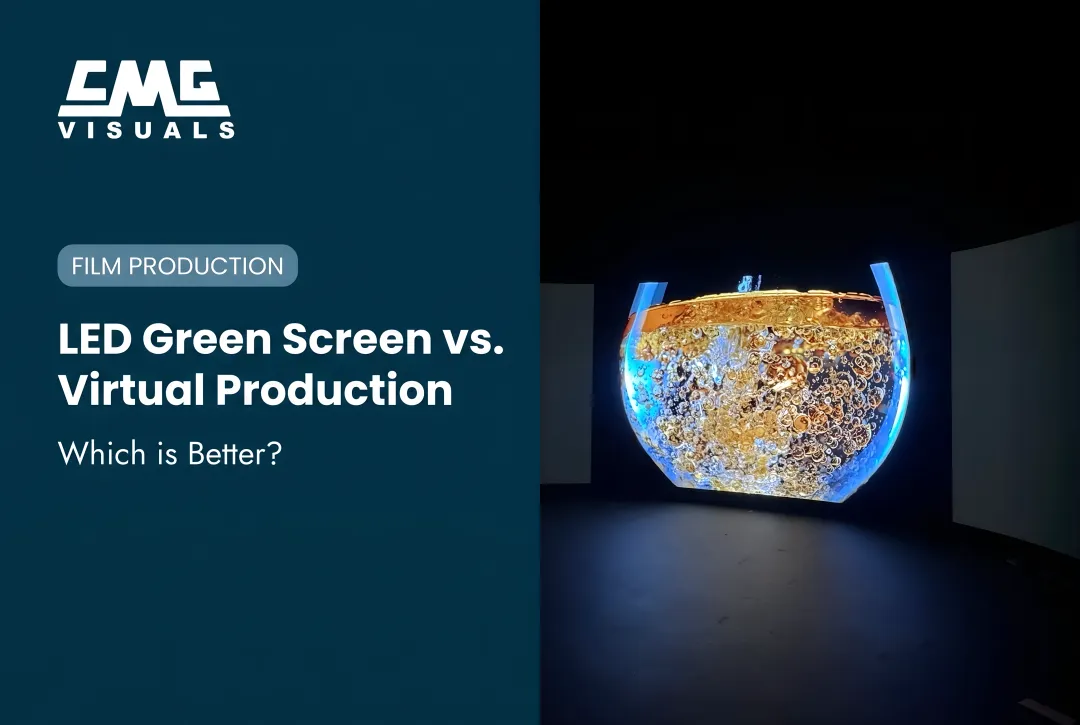
An LED volume wall is a curved, flat, or 360-degree array of interconnected high-resolution LED panels that displays synchronized 3D content as a live, in-camera background for actors and talent. The wall only earns the "volume" label once it's tied to camera tracking, a real-time render engine, and precise sync.
Why It Replaced Green Screen Guesswork
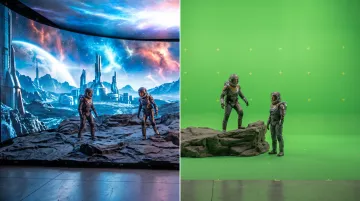
Traditional green screen forced actors to perform against a blank backdrop, then required hours of post-production compositing to add environments and matching light. Directors couldn't see the final shot on set. LED volumes fix that by rendering the actual environment live, so everyone sees the result in real time.
Even with AI-assisted VFX tools improving fast, LED volumes stay relevant for one simple reason: directors and actors get to react to the real environment during the take, not guess at it. That cuts down on costly reshoots caused by lighting mismatches discovered weeks later in the edit bay.
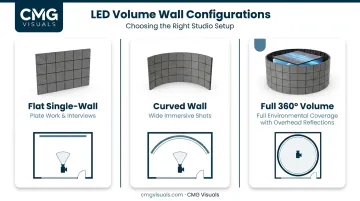
Wall Formats Vary by Production Need
The core working principle stays identical across formats: only scale and rigging complexity change.
- Flat single-wall setups: simple plate work, driving scenes, interviews
- Curved walls: wraparound immersion for wider shots and camera movement
- Full 360° volumes with ceiling panels: complete environmental coverage, including overhead reflections
How Does an LED Volume Wall Work?
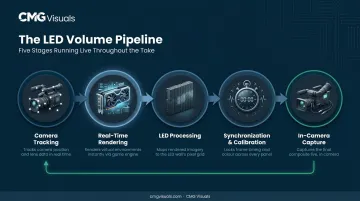
An LED volume runs as a continuous, automated pipeline throughout every take, combining four coordinated stages to keep the background locked to the camera.
Camera Tracking: Where It All Begins
The process starts when a tracking system captures the camera's exact position, angle, and lens data in real time. Two common systems illustrate the approach:
- Mo-Sys StarTracker Max — uses six-axis tracking plus lens zoom and focus data, reading a mapped pattern of retroreflective ceiling markers
- stYpe RedSpy — an optical tracking system with absolute lens encoders built for broadcast and virtual production
This tracking runs automatically for the full duration of filming. It's not manually reset per shot. The common bottleneck here is drift: if calibration slips even slightly, the background appears to "slide" independently of camera movement, and the whole illusion collapses.
Real-Time Rendering and Display
Tracked camera data feeds directly into a render engine (most often Unreal Engine), which recalculates the 3D environment from the camera's exact perspective to create accurate parallax.
This is where the frustum comes in. Only the portion of the wall inside the camera's field of view renders in sharp, perspective-correct detail. Epic Games describes this as the inner frustum, with the surrounding "outer frustum" panels displaying a simplified version used mainly for ambient light and reflections.
From there, the rendered image passes through an LED processor, which converts it into pixel-level data lighting each individual module across potentially hundreds of panels. Render frame rate, processor bandwidth, and panel refresh rate all have to match the camera's frame rate. Miss that alignment and you get visible tearing, lag, or banding on camera.
Synchronization and Calibration
Genlock and framelock tie the LED wall's refresh rate to the camera's shutter, preventing rolling bands, flicker, or moiré from showing up in footage. Timecode alone doesn't do this job — it identifies frames for editorial purposes, not display timing.
A few things get calibrated before anyone rolls camera:
- Color and brightness matching across every panel, so seams between tiles disappear
- HDR consistency under different camera exposures
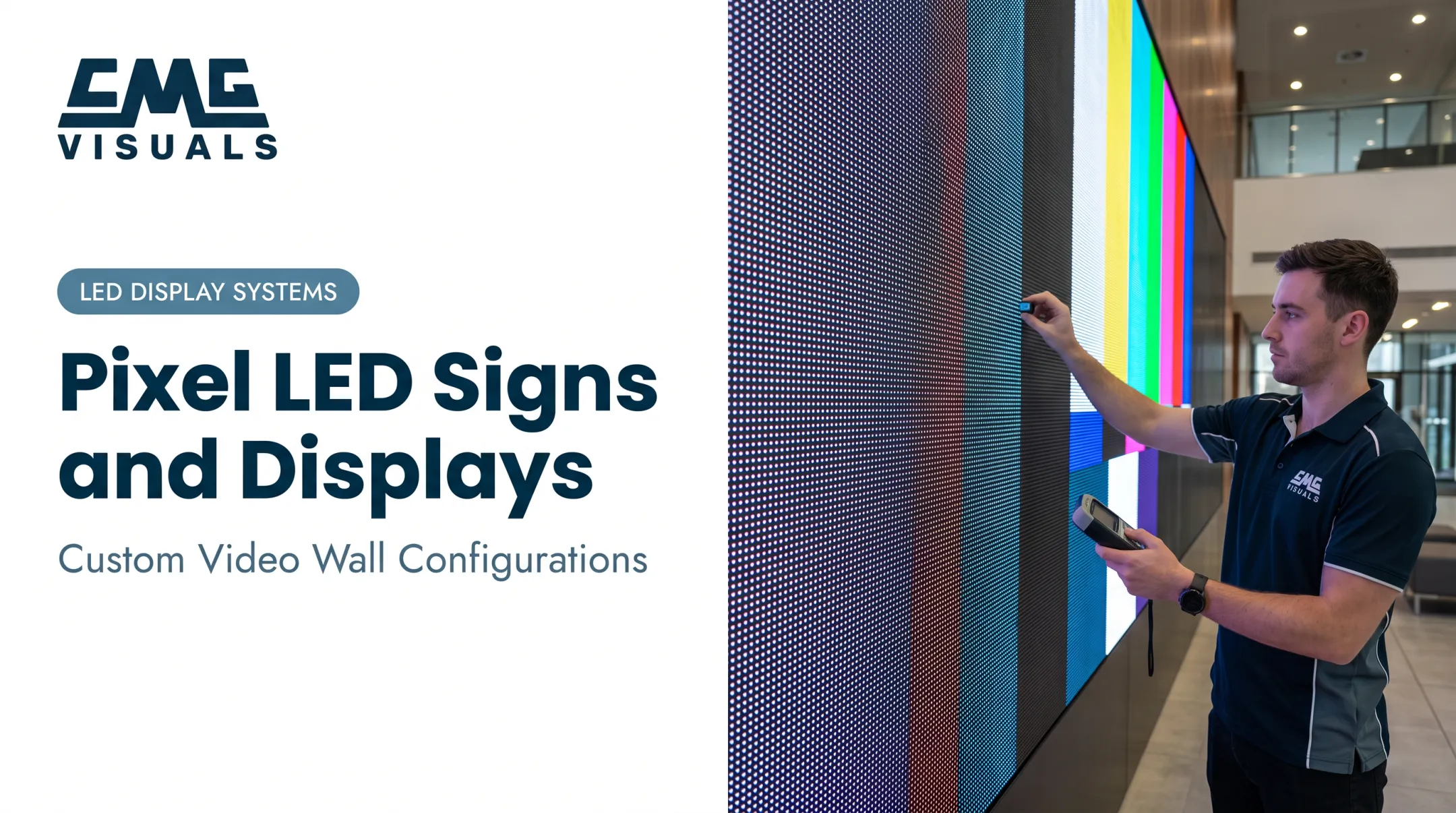
- Pixel pitch selection — tighter pitch reduces moiré risk as cameras move closer to the wall, but it costs more, so it needs to match typical camera distance and lens choice
This is where certified integration expertise earns its keep. At CMG Visuals, NovaStar-certified LED engineers configure processors and panels before problems show up on set, not after a director notices banding in dailies.
CMG works with pixel pitches from 0.9mm to 10mm across its product lines, so matching the right pitch to the right shooting distance is a decision made early, not fixed later.
In-Camera Capture: The Output
The final output is a photorealistic background captured live, in-camera, during the actual take rather than composited afterward. The wall also functions as a giant light source, casting accurate color, reflections, and ambient light directly onto actors, props, and set pieces — what the industry calls interactive lighting.
Because most of the environment and lighting is already baked into the footage, editors spend far less time on compositing and cleanup.
Variety reported that the LED-stage workflow on the FX series "Snowfall" saved up to $49,000 per episode compared to location shooting, by cutting transportation, crew loads, and shooting time. That's a project-specific figure tied largely to location comparisons, but it shows the kind of savings a well-run volume can generate.
Where Are LED Volume Walls Used?
LED volumes show up at multiple points in a production workflow:
- Pre-visualization and tech scouting — testing camera paths and lighting before the full crew arrives
- Principal photography on a soundstage, for dialogue-heavy or effects-heavy scenes
- Second-unit plate capture: driving scenes and exterior shots that would otherwise require location travel
They perform best under specific conditions:
- Controlled indoor environments with fixed rigging
- Productions needing a consistent background across multiple shoot days
- Scenes requiring interactive lighting on talent, not just a flat backdrop
The technology has moved well past film sets, too. Broadcast news programs, corporate keynote stages, product launch events, and worship production environments all use the same core mechanics to create immersive, repeatable visuals without rebuilding a physical set every time.
CMG Visuals serves several of these markets directly, working with broadcast, corporate, and worship clients across the Dallas-Fort Worth area, where demand for repeatable, high-quality backgrounds keeps growing.
LED Volume Wall vs. Green Screen
The two approaches solve the same problem, putting talent in front of a believable environment, through very different mechanics.
| Factor | LED Volume | Green Screen |
|---|---|---|
| Background capture | Live, in-camera, during the shoot | Composited digitally in post-production |
| Lighting on talent | Real, matching light and reflections cast directly | Spill must be removed; lighting is guessed to match an environment nobody can see yet |
| Upfront cost | Higher: panels, processors, tracking, calibration | Lower: chroma fabric, lighting rig, minimal hardware |
| Downstream cost | Lower post-production and compositing workload | Higher post-production time for keying, spill cleanup, and environment work |
| On-set visibility | Director and actors see the final shot live | Nobody sees the final composite until post |
Green screen still has a real place in production. Even "The Mandalorian" leaned on it for certain shots alongside its LED volume.
The choice usually comes down to whether a production wants to spend more upfront and less in post, or the reverse. There isn't a reliable, apples-to-apples industry number comparing total costs between the two approaches, since so much depends on scene complexity, shoot length, and how many VFX shots a green-screen project ultimately needs.
Conclusion
An LED volume wall works through the tight coordination of camera tracking, real-time rendering, LED signal processing, and synchronization. It's not simply a big screen playing video behind an actor.
Understanding that pipeline changes how producers, studios, and venues shop for one. Panel spec, processor choice, calibration expertise, and installation quality matter more than screen size alone. Get that wrong, and the most expensive wall on the market will still show banding on camera.
CMG Visuals' NovaStar-certified engineers handle that calibration step, matching specs to real shoot conditions.
Frequently Asked Questions
What is an LED volume wall?
It's a connected system of LED panels that displays real-time, camera-synced backgrounds for live-action filming. The environment moves and shifts perspective as the physical camera moves, creating accurate parallax.
What is the difference between a green screen and an LED volume wall?
An LED volume captures the background and lighting live, in-camera, with interactive light hitting actors directly. Green screen requires removing spill and compositing the environment afterward in post-production.
How much does an LED volume wall cost?
Cost varies widely based on wall size, panel pixel pitch, and processing equipment needed. Consult a supplier like CMG Visuals for a project-specific quote based on your camera distances and shooting needs.
How much power does an LED volume wall need?
Power draw depends on panel size, brightness, and pixel density, with larger and brighter walls requiring more dedicated circuits. Professional installs should have circuits sized by a qualified integrator before installation day.
What is genlock and why does it matter for LED volumes?
Genlock synchronizes the LED wall's refresh rate with the camera's shutter, preventing rolling bands and flicker from showing up on footage. Without it, even a perfectly tracked wall will show visible artifacts on camera.
Can LED volume walls be used outside of film and TV?
Yes. Broadcast studios, corporate keynote stages, product launches, and houses of worship all use the same core technology for immersive, repeatable visual environments without rebuilding physical sets.