Introduction
Walk into any wedding reception this year, and there's a good chance you'll see something different behind the head table. A glowing wall of light has replaced the draped fabric and floral arches couples used for decades.
LED walls have moved from concert stages into wedding venues, and planners are noticing. The Knot's 2025 wedding technology roundup names digital DJ booths and custom, changing visual displays as defining shifts in how couples decorate their events.
But the research phase gets messy fast. Couples land on vendor sites and immediately hit unfamiliar terms: pixel pitch, nits, refresh rate, rental versus purchase pricing that swings by thousands of dollars.
This guide breaks down what an LED wall actually does for a wedding, the different types available, and realistic cost ranges. It also covers how to pick a setup, and a vendor, that won't cause problems on the one day you can't redo.
Key Takeaways
- LED walls switch between ceremony backdrop, signage, and dance floor visuals
- Screen size and pixel pitch drive most of the cost and quality, not just brightness specs
- Renting fits a one-time wedding; buying pays off for venues and churches running frequent events
- Direct-sourced, certified providers cut markup pricing and wedding-day technical risk
Why LED Walls Are Transforming Modern Weddings
Traditional backdrops (fabric arches, vinyl banners, floral walls) are static. Once they're built, they're built. LED walls change that entirely: the same panel can display a starfield during vows, a floral animation during dinner, and a monogram during the first dance.
That flexibility is showing up in real wedding coverage. Wedding vendors increasingly report receptions using LED-screen DJ booths where the graphic content changed throughout the night, a level of visual variety static decor simply can't match.
Where LED wins over projection:
Projectors depend on dark rooms. AVIXA's 2024 guidance on display technology notes that front projection performs best in darker environments and loses clarity when ambient light competes with the image. Guests walking through the projection beam block the picture entirely, too. Direct-view LED panels don't have that vulnerability. They hold their image regardless of ballroom lighting or a crowded dance floor. That same reliability opens the door to interactive features many couples don't realize are possible.
Guest engagement features worth asking about:
- Live camera feeds (IMAG) for ceremonies where back rows can't see the altar clearly
- Social media walls pulling in guest photos throughout the reception
- QR-code displays for guest messages or wedding hashtag prompts
Not every vendor packages these the same way, so confirm what's included before booking.
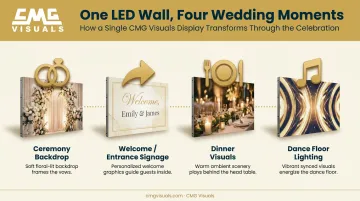
One wall, multiple jobs. A single LED display can serve as the ceremony backdrop, then get repositioned or reprogrammed for the welcome sign, dinner visuals, and dance floor lighting. That versatility often reduces the need for separate floral arrangements, uplighting rigs, and printed signage, cutting both rental costs and material waste compared to building several one-time decor pieces.
Types of LED Walls for Weddings
Wedding LED walls aren't one-size-fits-all products. Vendors typically categorize them by placement and job, not just screen dimensions. Here's how the main types break down.
Ceremony Backdrop Walls
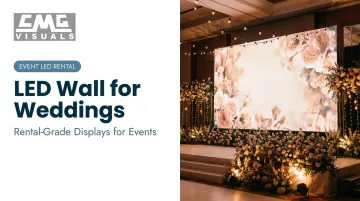
This is the visual focal point behind the couple during vows, replacing traditional arches and drapery. Instead of a fixed floral design, the content can shift from a soft gradient during the processional to a cinematic transition as the couple exchanges rings.
Reception & Entrance Walls
Positioned near the entrance or behind the head table, these handle welcome messages, countdown timers, and highlight reels as guests arrive or during dinner service. They tend to run lower-intensity content compared to the ceremony wall since guests view them at close range for longer stretches.
LED Dance Floors
These are purpose-built, music-reactive floor panels, not repurposed wall cabinets laid flat. Manufacturers like ROE Visual build dedicated interactive floor products with their own structural ratings and load documentation. Any vendor proposing an LED dance floor should assess the venue's actual floor structure first, not assume a standard ballroom surface can handle it.
Photo Booth & Social Wall Surrounds
Rather than a static step-and-repeat banner, these backdrops change per photo group, cycling through different colors, patterns, or branded content for each set of guests posing for pictures.
Curved & Custom-Shape Walls
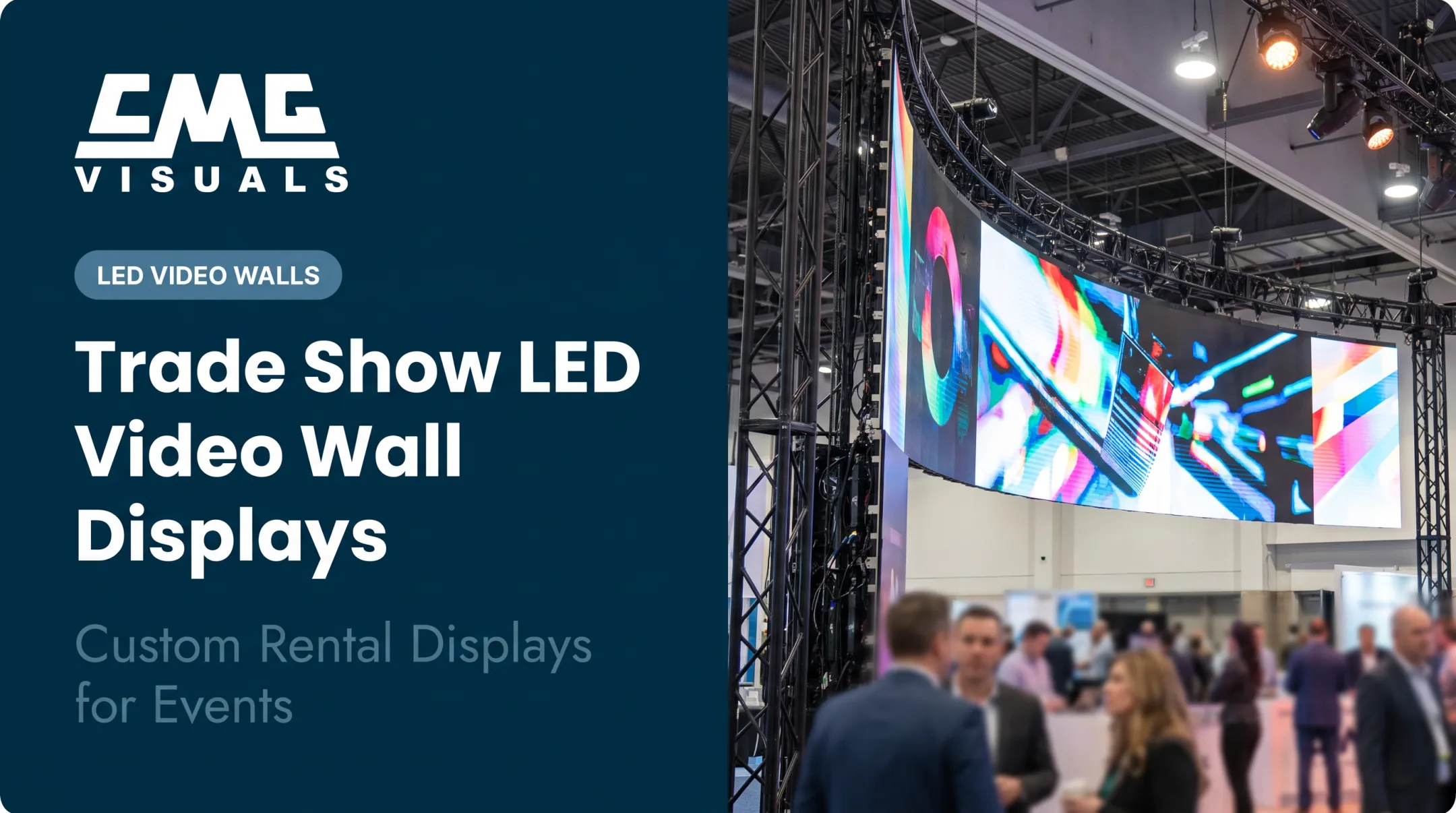
Modular panels can form arches, cylinders, or angled wings to match unique venue layouts. Vendors offering specialty configurations, such as CMG Visuals' curved, cylinder, and floor-standing product lines, build these shapes from half, quarter, and custom triangular modules rather than standard flat cabinets.
A well-documented example: PLSN's case study on a casino installation describes a 25-meter, 8K crescent-shaped screen built from 56 panels wide using this approach. Expect a cost premium for this level of customization, driven by specialty modules and installation complexity rather than a fixed percentage markup.
How Much Does an LED Wall Cost for a Wedding?
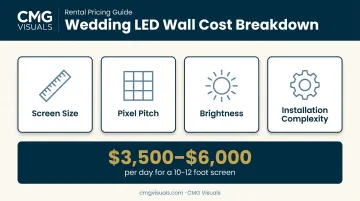
Cost comes down to four variables: screen size, pixel pitch, brightness, and installation complexity. Bigger walls with tighter pixel pitch (meaning higher resolution at close range) and higher-brightness panels for bright venues all push the price up.
Rental pricing benchmark:
According to CMG Visuals' rental cost guide, a medium-to-large direct-view LED screen around 10 to 12 feet wide typically runs $3,500 to $6,000 for a single day. That range shifts based on your specific size, pitch, and venue logistics, so treat it as a starting benchmark rather than a fixed quote.
Watch for these add-on costs:
- Delivery and setup logistics
- On-site technician for event-hour coverage
- Custom content creation (animations, monograms, transitions)
- Generator or power distribution for outdoor ceremonies
Ask any vendor to itemize these separately before signing. A quote that looks cheap upfront can balloon once delivery and technician fees get added on the invoice.
Purchase vs. Rental: When Ownership Makes Sense
Buying outright only pencils out for organizations running multiple events per year, venues, planners with a steady booking calendar, or churches hosting weddings regularly. A single couple planning one wedding almost never benefits from ownership costs, storage, and maintenance.
Working with a direct-sourced provider matters here too. CMG Visuals sources its equipment directly rather than brokering through distributors, which removes a markup layer common in the rental industry. Purchases still come backed by a five-year hardware warranty and lifetime product support.
Renting vs. Buying an LED Wall for Your Wedding
For a couple planning a single wedding, renting is almost always the right call. You get professional-grade equipment, delivery, setup, and (ideally) a technician, without the burden of owning hardware you'll use once.
Buying makes sense for:
- Venues hosting weddings and events weekly or monthly
- Wedding planners running multiple events per season
- Houses of worship using the display for weekly services beyond weddings
Ownership brings responsibilities most one-time couples don't want: storage between events, transport logistics, ongoing maintenance, and eventual repairs. A rental package hands all of that off to the vendor.
If you're a venue or planner considering purchase, ask about hardware warranty length and what support is included after installation. A strong warranty offsets a lot of the long-term maintenance risk that comes with owning display equipment. CMG Visuals, for example, backs every screen it sells with a 5-year hardware warranty and lifetime product support, a useful benchmark when comparing options.
Choosing the Right LED Wall Specs & Vendor
Before booking, confirm these specs in writing:
- Pixel pitch – the spacing between LED pixels, measured in millimeters. Tighter pitch means sharper images for photo booth and ceremony walls guests stand near.
- Brightness – outdoor weddings need much higher nit ratings than indoor ballrooms to stay visible in daylight.
- Refresh rate – if the wedding will be filmed, ask how the vendor syncs camera and display timing. A spec sheet listing 3,840 Hz doesn't guarantee flicker-free footage without proper scan alignment.
Vendor Checklist
Run through this before signing anything:
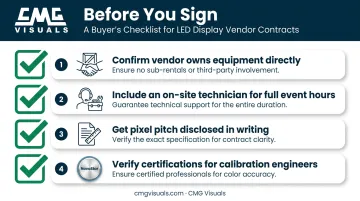
- Confirm they own their equipment rather than brokering it from a third party
- Include a technician for full event hours, not just setup and teardown
- Get pixel pitch disclosed in writing, not just verbally quoted
- Ask about certifications for the engineers handling calibration
That last point matters more than couples realize. NovaStar's certification pathway trains technicians specifically on LED calibration and display control systems.
CMG Visuals' team includes NovaStar-certified LED engineers. That means the person calibrating your wall understands the control system, not just the cabling — reducing the odds of a glitch mid-ceremony.
Frequently Asked Questions
How much does an LED wall cost for a wedding?
Cost depends on screen size, pixel pitch, and whether you rent or buy. A mid-size rental wall often runs $3,500 to $6,000 per day. Always request an itemized quote covering delivery, setup, and technician fees.
What are the different types of LED walls for weddings?
The main types are ceremony backdrops, reception and entrance walls, LED dance floors, photo booth surrounds, and curved custom-shape walls. Each serves a distinct placement and function during the event.
How far in advance should I book an LED wall for my wedding?
Book several weeks to a few months ahead, especially during peak wedding season when vendor availability tightens. Popular dates and larger custom configurations need more lead time.
Can an LED wall be used outdoors for a wedding?
Yes, but you need weatherproof panels rated for outdoor use. Look for IP65-rated equipment, which is dust-tight and protected against water jets. You'll also want high brightness for daylight visibility.
Is it better to rent or buy an LED wall for a one-time wedding?
Renting is more cost-effective for a single wedding since you avoid ownership, storage, and maintenance costs. Buying only makes financial sense for venues or planners running frequent events.
Do I need a technician on-site during my wedding for the LED wall?
Yes, having a technician present for full event hours helps catch and resolve display issues quickly before they disrupt the ceremony or reception. At CMG Visuals, this NovaStar-certified technician support is included in every rental, not billed as a separate add-on.